Why Arrow Puzzles Are Good for Your Brain | Arrow Puzzle Escape
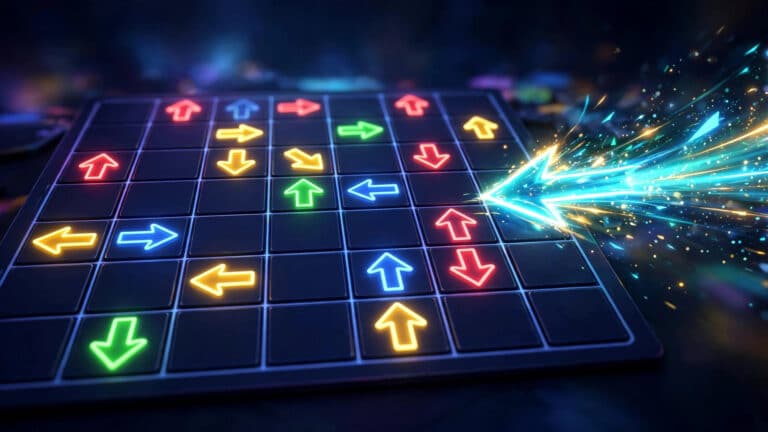
Stare at a grid of arrows long enough and something strange happens. They stop being little icons and start becoming intentions. That one wants to go left. This one wants to go up. But they’re all in each other’s way, and suddenly you’re not looking at a puzzle anymore — you’re negotiating traffic.
That negotiation is the workout. Here’s what’s actually going on in your head when you play, what science can and can’t promise about it, and how to get the most out of every grid.
Your brain is doing more work than it feels like
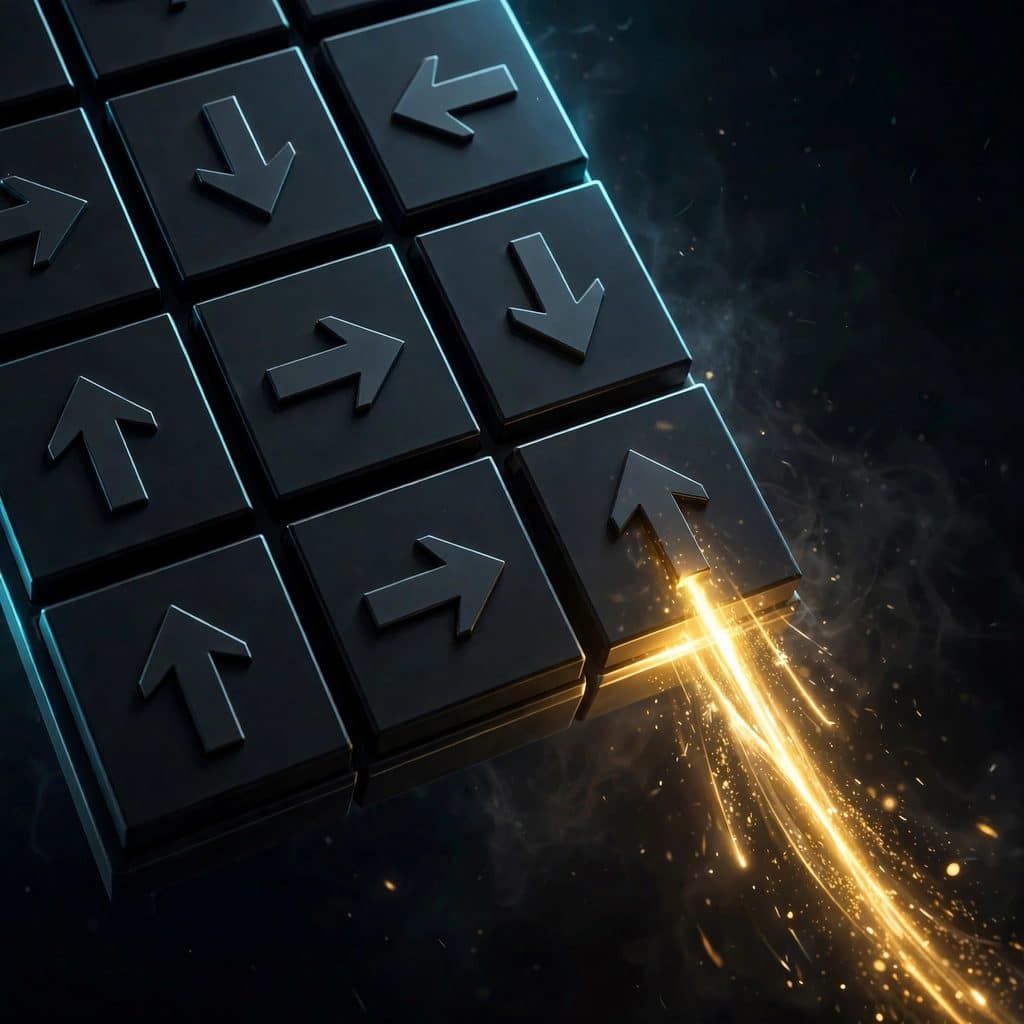
Arrow puzzles look simple. Tap the arrows in the right order, clear the board, done. But “simple” and “easy” aren’t the same thing, and the gap between them is where your brain earns its keep.
Spatial reasoning. Every move forces you to mentally simulate the board one step into the future. If I slide this arrow left, where does it end up? What does that open up? What does it block? You’re rotating and projecting shapes in your mind without touching anything — the same skill you use to pack a trunk, read a map, or parallel park.
Working memory. The moment you start planning two or three moves ahead, you’re holding a whole imaginary board state in your head while you test sequences against it. That mental scratchpad is working memory, and arrow puzzles load it heavily. Not with numbers or words, but with positions and directions, which makes it a nice change of pace from the verbal puzzles most brain-training apps lean on.
Planning and impulse control. Here’s the sneaky one. The obvious first move in an arrow puzzle is frequently wrong. There’s always one arrow that looks free, begging to be tapped, and tapping it first collapses the whole solution. So you learn to pause. To hold back the easy move and check the second-order consequences. Psychologists call that inhibitory control, and it’s the same faculty that keeps you from sending the angry email.
None of this feels like exercise while you’re doing it. That’s the trick of a good puzzle — the effort hides inside the fun.
What the science actually says (the honest version)

Let’s be straight about this, because the internet is full of puzzle apps promising they’ll rewire your brain in 10 minutes a day.
What researchers have genuinely found: people who regularly spend time on cognitively demanding leisure activities — puzzles, strategy games, learning instruments, reading dense books — tend to maintain sharper thinking as they age. The concept is called cognitive reserve: the idea that a lifetime of mental challenge gives the brain more alternate routes when some pathways slow down. It’s an association, not a proven cause-and-effect, but it’s one of the more consistent findings in aging research.
There’s also a neat concept from learning science called desirable difficulties (Robert Bjork’s term). The short version: material that’s slightly hard to process sticks better than material that’s effortless. An arrow puzzle that makes you sit and stew for five minutes is doing more for you than one you breeze through — the struggle is the point.
And then there’s flow — that locked-in state where the challenge matches your skill and time dissolves. Arrow puzzles are almost engineered for it: clear goal, instant feedback, difficulty that ramps level by level.
Now the caveat, because honesty matters: getting better at arrow puzzles mostly makes you better at arrow puzzles. Scientists call the broader hope “far transfer” — the idea that training one mental skill upgrades everything else — and the evidence for it is genuinely mixed. A puzzle habit won’t raise your IQ or inoculate you against aging. Anyone selling that is selling something.
What a daily puzzle habit can do is more modest and more real: keep your reasoning machinery oiled, train sustained attention in a world engineered to fragment it, and give you a small daily proof that you can sit with a hard problem until it cracks. That last one might be the most valuable of all.
Why arrows, specifically
Not all puzzles exercise the same muscles. Crossword puzzles lean on vocabulary. Sudoku leans on constraint logic. Arrow puzzles lean on something more primal: direction.
Reading an arrow is nearly automatic for the human brain — it’s one of the earliest spatial symbols we learn. That matters because it means almost zero mental energy goes into understanding the rules. There’s no tutorial to memorize, no symbol key to consult. All of your cognitive budget goes straight into the actual reasoning: sequencing, blocking, unblocking, planning.
It’s also why arrow puzzles are so easy to pick up and so hard to put down. The interface between you and the problem is frictionless, so there’s nothing standing between your brain and the challenge except the challenge itself.
How to squeeze the most brain benefit out of every puzzle

If you’re playing anyway, you might as well play in a way that trains harder. Four habits that actually matter:
1. Plan before you tap. The single biggest upgrade most players can make. Before touching anything, try to see three moves ahead. You’ll be wrong a lot at first — that’s fine. The planning muscle is what you’re building.
2. When you’re stuck, walk away. This isn’t giving up; it’s strategy. Psychologists call it incubation — your brain keeps chewing on a problem in the background while you do something else. Some of the hardest levels in any arrow game fall within minutes of coming back to them. The answer was there all along; you just needed to stop staring at it.
3. Replay old levels and beat your past self. Finished a level in 12 moves last week? Try it in 9. Optimization is a different cognitive gear than first-time solving — it forces efficiency thinking instead of just search.
4. Make it a daily habit, not a weekend binge. Fifteen minutes a day beats two hours on Sunday. Consistency is what turns a fun distraction into genuine mental training — and it’s exactly what daily challenge modes are designed for.
What arrow puzzles won’t do for you
A quick reality check, because a trustworthy article should say this part out loud:
- They won’t make you a genius. Intelligence is far more complicated than any single activity.
- They’re not a substitute for sleep, exercise, or an actual social life — all of which do more for your brain than any game ever will.
- If a puzzle stops being fun and starts feeling like homework, take a break. Forcing it kills the engagement that makes the whole thing work.
Puzzles are one ingredient in a thinking life, not the whole recipe. A good ingredient, but still just one.
The bottom line
Arrow puzzles train spatial reasoning, working memory, and planning under the disguise of a simple tapping game. The science says mentally challenging habits are associated with sharper thinking over time — modestly, honestly, without miracle claims. And the humble arrow turns out to be the perfect vehicle: so intuitive that all your effort goes into thinking, not into learning how to play.
If you want to put it to the test, that’s literally what Arrow Puzzle Escape is built for — 100 hand-tuned levels from 5×5 to 8×8 grids, a daily challenge to keep the habit, and hints for the moments when walking away isn’t enough. Free, no signup, works on your phone.
Your move. The arrows are waiting.
FAQ
How long should I play puzzle games each day for brain benefits?
There’s no magic number, but 10–15 minutes of focused play beats an hour of distracted tapping. Consistency matters more than duration — a short daily session keeps the habit alive.
Are arrow puzzles good for kids?
Yes. They build spatial reasoning and patience without requiring reading or math skills, which makes them one of the few genuinely educational games young kids can play independently. Start them on the smaller 5×5 grids.
Do puzzle games actually improve memory?
They exercise working memory — the mental scratchpad you use to hold and manipulate information. Whether that training transfers to everyday memory tasks is still debated by researchers, but the practice itself is cognitively demanding in a way passive scrolling isn’t.
What’s the best time of day to do puzzles?
Whenever your mind is fresh. Many people find a short morning session sharpens focus for the day; others use puzzles as an evening wind-down instead of social media. Experiment and see what sticks.